NDIS Travel Time: Paid in Full, Claimable in Part

An NDIS or supported independent living roster is built on hours and rates. A coordinator looks at a shift, checks which worker is available, checks the wage cost applies and slots it in. However, some shifts involve travel between clients, and this can change things.
While getting to and from work at the start and end of the day is down to the care worker and isn't a cost they can claim, travel between shifts often qualifies for financial compensation under the SCHADS award, and this can affect financial outcomes.
Find out why kilometres travelled are an overlooked cost lever and how to bring tracking under better control.
In short:
- Travel between shifts is often paid work time under SCHADS, but NDIS claiming caps it (e.g. 30 minutes in metro areas), leaving a gap that providers have to absorb.
- A vehicle allowance applies separately under the SCHADS award, covering per-kilometre costs when a worker's own car is used between clients.
- Rosters rarely capture travel and distance upfront, so the true cost of a shift only becomes clear once payroll processes travel-related claims.
- Grouping shifts by location, not just worker availability, can cut travel costs without affecting participant care.
- Visualcare helps roster managers figure out distances at the planning stage, which can help bring shift costs under better control.
Travel between clients: paid in full, claimable in part
When a care worker travels between clients during a shift, that travel is paid working time under the SCHADS Award. However, under NDIS rules, only part of it can be claimed back. That gap is one of the easiest places for roster costs to leak.
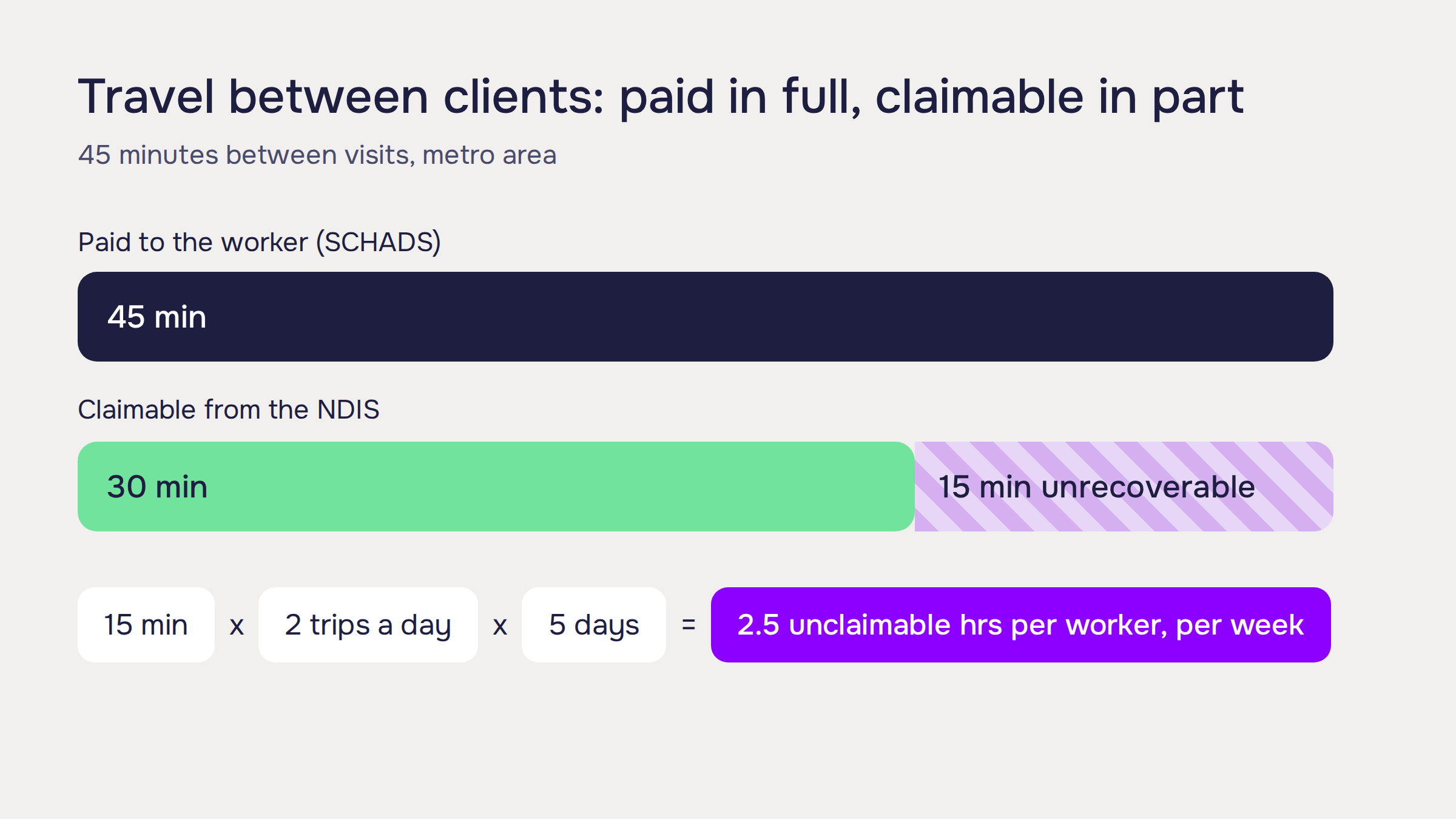
For example, a casual disability support worker rostered for 5 hours spends 1.5 hours with one client, travels 45 minutes to a second client, then works 2 hours and 45 minutes there. All 5 hours are paid, and the shift counts as continuous.
On the claiming side, providers in metro areas can claim up to 30 minutes of travel time. In the example above, that leaves 15 minutes of paid time the provider can't recover.
On its own, 15 minutes is minor. Repeat it twice a day, five days a week, and that's 2.5 unclaimable hours per worker, every week. Across a full workforce, it adds up fast.
The true cost of a roster goes beyond shift hours multiplied by pay rates. It also includes unbillable travel time and distance travelled, priced against the claiming caps. Providers who only price the billable side are missing part of the picture.
Keep claims compliant
To add to the above, travel and service time must appear as separate line items on invoices and claims. Gap fees, surcharges or any charge above the NDIS price limit aren't permitted and can become a reportable compliance issue.
The challenge with shift-related travel and rostering
Care shift rosters often note location, client name, shift requirements and care workers, but fail to accommodate travel and distances between clients.
Rosters may look reasonable, with hours allocated and care workers booked to visit clients. However, once travel claims come in and payroll has to process the extra costs, the true expense of each shift worked becomes clearer... and it's often more than expected. By this stage, the services are already delivered, and there's no going back.
This is the same pattern that shows up elsewhere in service delivery: the plan and the outcome are two different things, and the gap between them is where money is lost. With travel, the gap is distance and time that never appears on the roster in the first place.
Two questions worth asking before a care shift
There are two things worth working out when a roster is created.
The first is whether labour costs can come down without touching service levels. Most providers assume the only way to reduce cost is to reduce shifts or reduce hours, both of which affect the participant.
Travel time has a role to play. It's a cost that can shrink without changing a single hour of care delivered, just by rostering shifts in a way that reduces the distance between them. Grouping shifts by location rather than purely by availability can cut real cost with no impact on the participant at all.
The second is whether a shift is actually profitable once travel is accounted for. A shift that looks fine on the roster, with the correct rate and correct hours, might carry enough unbillable travel either side of it that the margin is thinner than it looks, or gone altogether. Working that out before the shift is rostered, rather than after the pay run confirms it, is the difference between a cost you can adjust and one you can only explain.
What to actually do with a route
Fixing cost gaps can come down to basic route logic that most coordinators can apply if they have the information in front of them.
Having a clear understanding of distances and client locations will prevent the problem of shifts scattered across a service area that could be clustered together, or planning a worker's day so a care worker ends up travelling back and forth across the same suburbs.
Once kilometres and travel time are visible alongside hours and rates, rostering decisions can be made with a fuller picture.
Where Visualcare fits into travel times and rostering
Visualcare's rostering tools are built to bring travel and other factors that can influence cost and claimability clearly into view before a shift is locked in. This supports roster managers, shift workers and payroll teams:
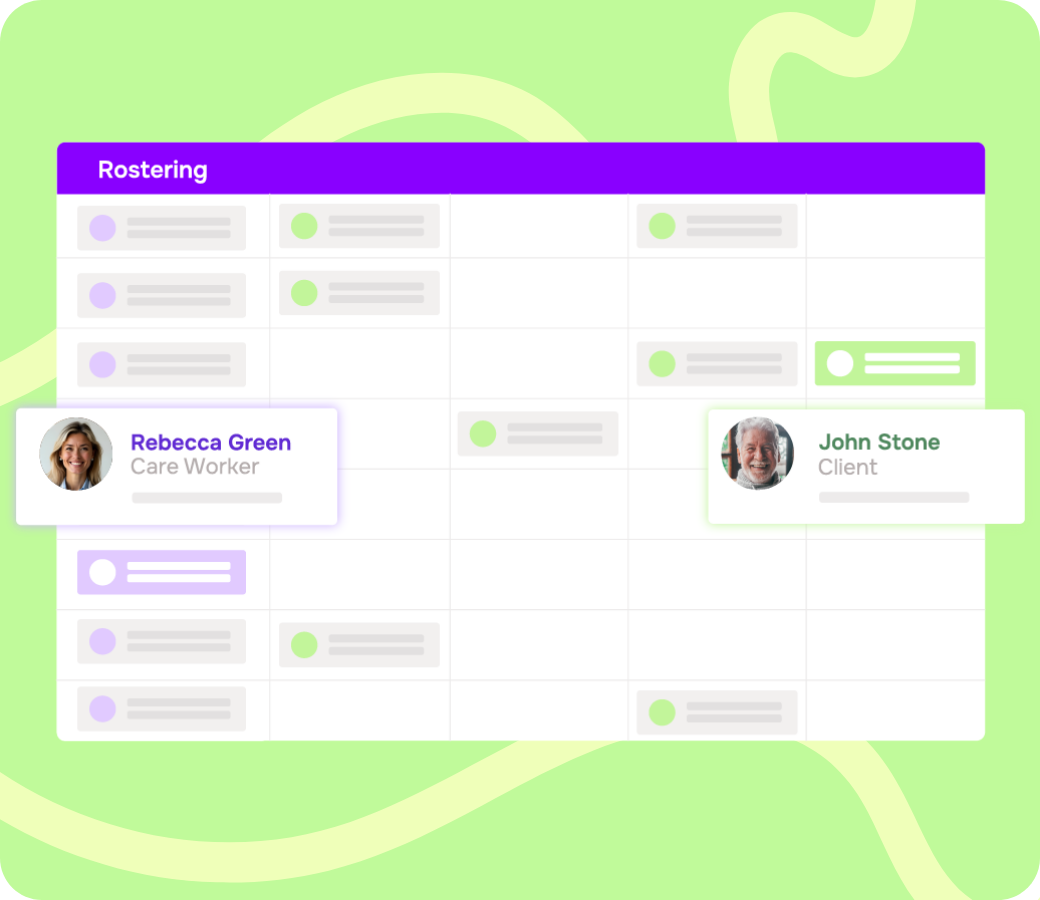
Roster managers can access settings that help manage the way travel time and between-visit kilometres are charged and paid. This can help them determine whether a gap between two visits is even picked up as travel, which ties back to how shifts are structured and rostered in the first place.
For example, the client and worker map within Visualcare displays clients and workers on a map based on their addresses. This helps with rostering decisions by showing proximity between workers and clients. The map is useful for identifying which workers live closest to a client, planning rosters to minimise travel time between shifts and reviewing geographic coverage across a service area.
Workers enter transport kilometres (distance travelled while transporting a client) into their Visualcare app when they complete their shift. Between-visit kilometres, the distance travelled from one client to the next, are calculated automatically from client addresses and shift timing once an office user runs the process.
Payroll managers handle the bulk of the confirmation work. Before each pay or invoicing run, they open the worker's timesheet, populate the between-visit kilometre figures, and review the transport kilometres workers have logged so they're ready to export.
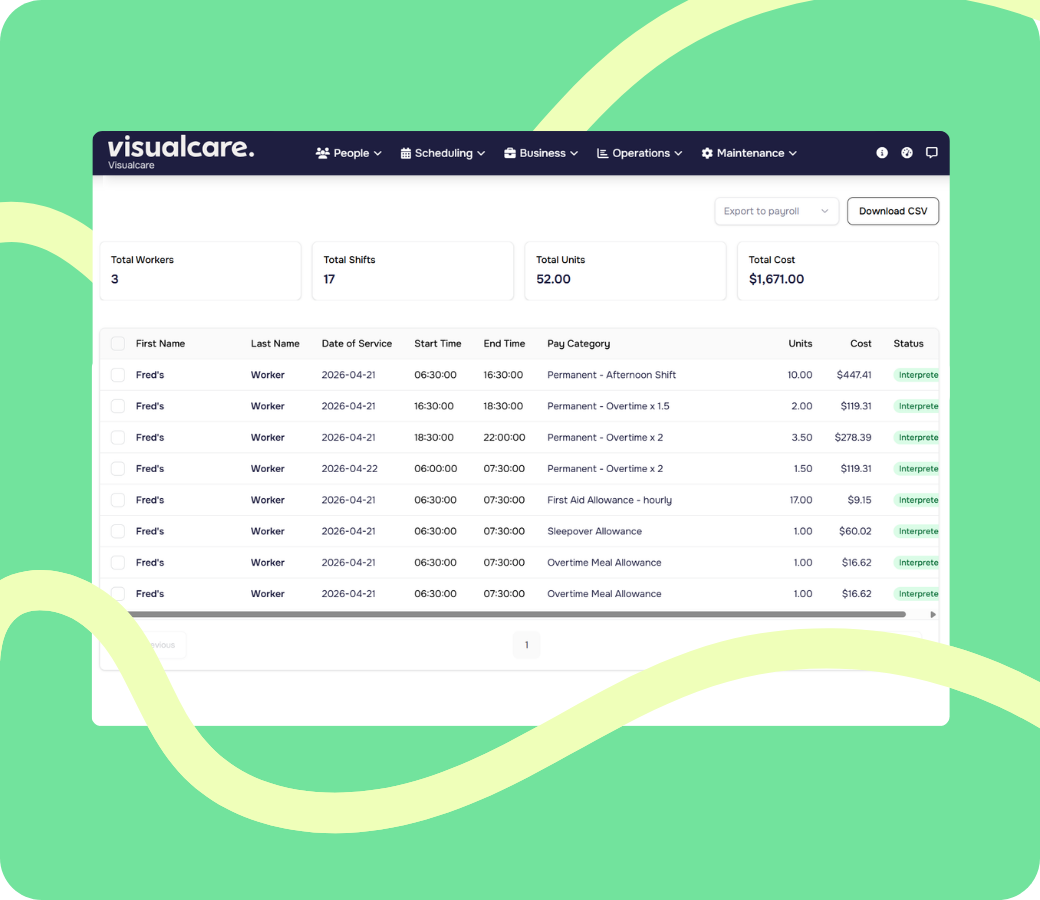
Read more: How Visualcare captures and manages transport kilometres and between-visit kilometres
Are your care worker travel costs under control?
Travel costs are a fixed feature of care delivery, but pricing only the billable side of a roster can drain profits. Bringing distance and travel time into view when a roster is built, rather than after shifts are delivered and claims come in, is an opportunity to improve cost visibility and bring it under control.
Request a demo to see how Visualcare's rostering tools bring travel costs into view before the roster is built, not after.
Request a Demo
Let us show you how Visualcare can work for your care organisation.