
How aged care providers should approach rounding care management time within Support at Home
.png)
Support at Home changes the way providers plan, deliver, document, and bill for services. One of the most practical shifts sits in an area that seems small, yet carries significant financial and compliance impact: rounding care management time.
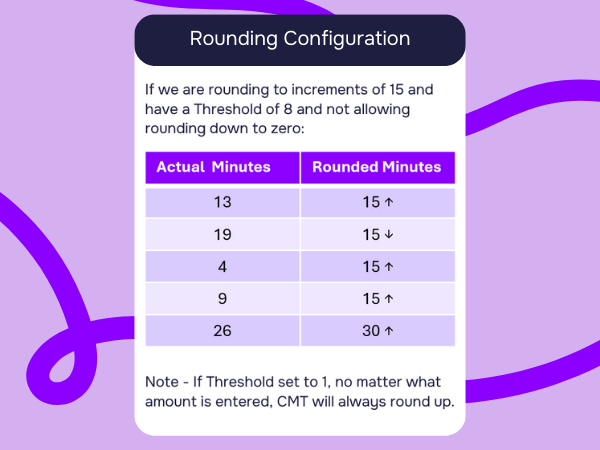
In the current Support at Home environment, time spent coordinating, monitoring, or updating a person’s support is recognised and billable, but how providers record that time must align with strict expectations around accuracy and transparency. The margin for rounding up or estimating minutes is narrow. Every increment needs clear evidence that time was reasonable, justified, and tied to a person’s support plan.
This calls for a different approach. Not tighter control for its own sake, but a move toward accurate, defensible, care-plan-aligned time records that strengthen service quality while protecting revenue.
Why rounding matters in Support at Home
Support at Home treats care management as planned, structured, and accountable work. It requires providers to show that every billed minute aligns with the older person’s goals, risks, or support needs.
The rule is simple:
Only time genuinely spent supporting the older person counts. Every billed minute must link to their plan.
When rounding is inconsistent, even small deviations can create:
- over-reporting that puts providers at risk
- under-reporting that masks the real cost of service delivery
- documentation inconsistencies that weaken audit readiness
Support at Home reshapes the expectations for how teams record and justify their time, and providers need clear rounding practices that keep pace with these requirements.
A care-plan-first approach to rounding time
Visualcare holds a core operational ethos: Every downstream error can be solved at the moment of scheduling. The same applies to care management. When the care plan shapes the work upfront, rounding becomes accurate, consistent, and defensible.
A care-plan-first approach means:
1. Align time to the person’s support plan
Care management tasks are easier to justify when tied to a goal, risk, or planned review. Staff avoid guesswork because the plan defines the purpose of the work.
2. Record the actual time, not the estimate
Support at Home expects increments to reflect what happened. Standard blocks or habitual rounding up no longer hold up under scrutiny.
3. Make evidence simple to capture
Clear, structured prompts support staff to record exactly what they did and why. This improves clarity and reduces variation in how time is rounded.
4. Connect time to the roster whenever possible
When work is scheduled, it becomes auditable and easier to align with service categories. Rostered tasks also streamline downstream billing accuracy.
5. Keep office decisions connected to frontline documentation
This prevents drift in how staff interpret and round time.
This approach meets Support at Home’s expectations without adding unnecessary administrative burden.
Where providers commonly run into difficulty
Many aged care providers, even those with strong internal processes, face similar issues:
- Different rounding habits across coordinators
- Multiple tools that force staff to reconstruct time entries later
- Paper or SMS notes that don’t link to the roster
- Inconsistent evidence that makes it hard to defend billed time
Support at Home increases the pressure to eliminate these gaps because evidence-of-service and financial accountability sit at the centre of the new model.
How Visualcare supports accurate care management time
Visualcare helps providers simplify rounding by ensuring every minute recorded is:
- Linked to planned work
- Aligned with the person’s support plan
- Supported by evidence-of-service
When care-plan details guide rostering, documentation, and billing, rounding stops being a manual decision and becomes part of a consistent workflow.
Visualcare supports coordinators to schedule care management tasks with service category context, so time is clearly defined before work begins.
The worker app links every entry to a rostered activity, helping teams capture consistent, SAH-ready evidence-of-service.
Together, they close the loop between planning, delivery, documentation, and billing — a requirement that matters right now under Support at Home.
Practical rounding guidelines to use immediately
Providers can strengthen their SAH compliance today by adopting these steps:
Use a clear, consistent rounding rule
For example, round to the nearest one-minute increment and avoid automatic rounding up.
Roster care management tasks whenever possible
If it is planned, it is traceable and easier to justify.
Capture structured notes
Prompts improve the clarity and defensibility of every billed minute.
Avoid batching entries at the end of the day
Real-time or near-real-time documentation reduces the risk of estimation.
Train staff on the link between time, evidence, and the support plan
When teams understand the purpose behind the rule, accuracy follows.
The shift for providers working within Support at Home
Support at Home lifts the bar on how providers demonstrate the value of their care management work. With clear rounding rules and care-plan-first technology, providers can show the impact of every minute spent supporting an older person — and ensure billing remains accurate and compliant.
In this environment, the most successful providers aren’t tracking more time. They’re tracking time more clearly.
Want help reviewing your rounding approach?
If you’d like support reviewing your care management workflows or exploring how Visualcare helps providers meet Support at Home expectations, we’re here to help.
Request a Demo
Let us show you how Visualcare can work for your care organisation.

.png)


